

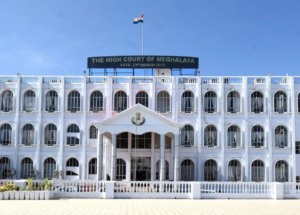
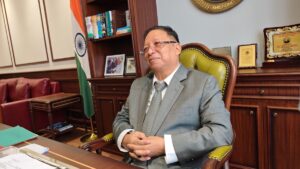

The High Court of Meghalaya has accepted a Public Interest Litigation (PIL) that questions the inclusion of non-tribals in elections for the Garo Hills Autonomous District Council (GHADC). The PIL, filed by Niksrang Ch Marak with legal counsel P. T. Sangma, prompted a bench led by Chief Justice Revati Mohite Dere to schedule further hearings for March 9 after the respondent’s counsel requested time for review. This legal challenge arises following a notification from the GHADC, which prohibits non-tribal individuals from contesting the council elections set for April 10, requiring candidates to present a Scheduled Tribe (ST) certificate issued by the Meghalaya government.
The notification, issued on February 17, mandates that only candidates holding an ST certificate can file nomination papers. While many Garo tribal organizations support this measure as essential for preserving their indigenous identity, non-tribal leaders have criticized it as unconstitutional, claiming it violates their democratic rights. Additionally, the GHADC has implemented another directive under the Sixth Schedule of the Constitution of India that prevents non-tribals from acquiring or claiming land in the five Garo Hills districts. This regulation aims to protect the traditional land rights of indigenous communities and prevent their lands from being alienated to non-tribal individuals.
According to this latest directive, any non-tribal person is forbidden from acquiring properties within the Garo Hills and any attempt to transfer land rights to non-tribals will be rendered invalid. Provisions against benami transactions — where land is held by a tribal person but intended for a non-tribal — have also been declared void and unenforceable. Although the directive states that any lands acquired in violation may be resumed or canceled, it does not affect non-tribals who legally inherited property before the issuance of these regulations. Transactions approved by government authorities will remain valid, though they cannot be transferred without official consent.
The GHADC’s actions have ignited significant debate in Meghalaya. While indigenous groups laud the measures as necessary for their heritage and socio-political identity, non-tribal leaders argue that such amendments to the Sixth Schedule’s provisions should be made solely by the central government, underscoring the contentious nature of these new regulations in the region.











+ There are no comments
Add yours