




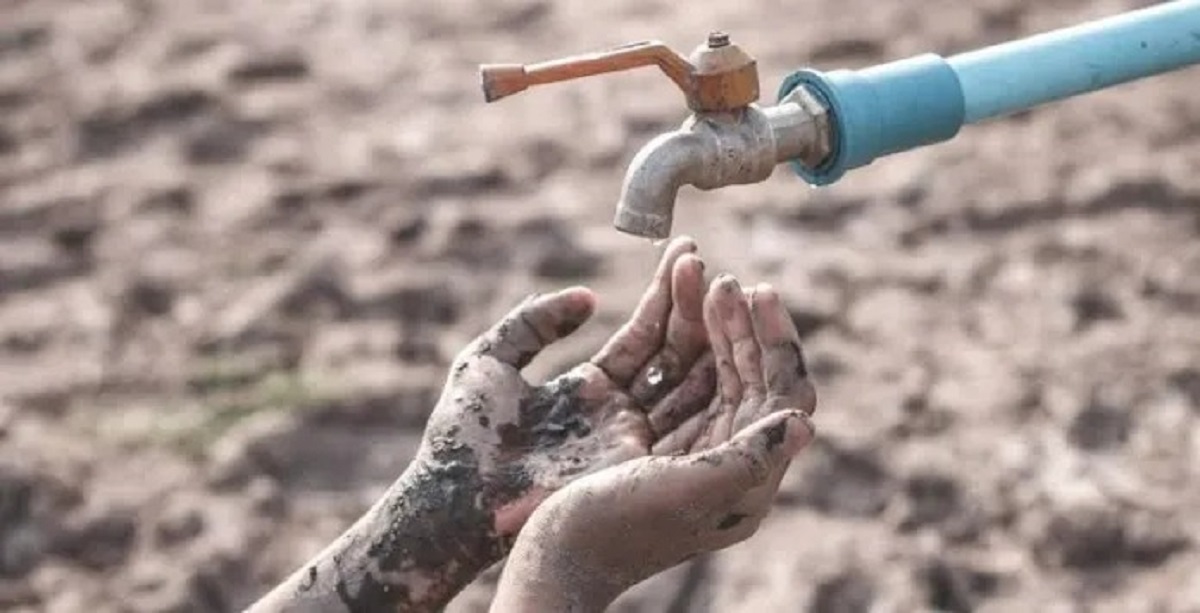
Shillong The Economic Survey tabled in Parliament on Thursday has raised serious concerns over Meghalaya’s worsening water security, warning that nearly half of the state’s natural springs have either dried up or are witnessing a sharp decline in water discharge.
Despite being known as the rainiest state in India, Meghalaya is increasingly facing water scarcity due to a combination of anthropogenic pressures and climate change, the Survey noted. The report, presented by Union Finance Minister Nirmala Sitharaman ahead of the Union Budget, highlighted that environmental degradation and erratic weather patterns are undermining the state’s traditional water sources.
A recent study by Meghalaya’s Soil & Water Conservation Department mapped over 55,000 spring sheds out of the 70,000 identified across the state. Of these, 792 water sources were found to be in critical condition, with several completely dried up and some beyond revival. This is despite the implementation of water-related projects worth ₹8,000 crore.
Many of these spring sheds are vital for water supply systems under the Jal Jeevan Mission, particularly in Shillong. Acknowledging the gravity of the situation, the state government has set up a Climate Council chaired by Chief Minister Conrad K. Sangma to coordinate inter-departmental efforts.
The Survey highlighted Meghalaya’s community-centric adaptation strategies, including initiatives such as the Protection of Vulnerable Catchment Areas in Meghalaya (MegARISE), the Spring Mapping Initiative, and the Climate-Adaptive Community-Based Water Harvesting Project.
The MegARISE project aims to enhance water security through watershed treatment, forest restoration, and community participation. It includes plans to establish plantations over 8,430 hectares and to protect two key catchments — Umiew and Ganol. Advanced GIS mapping has been used to document over 55,000 springs to facilitate timely interventions.
Additionally, more than 500 community-based water-harvesting projects are being implemented to strengthen climate-resilient water management.
The Survey attributed the drying of springs to deforestation, soil erosion, unscientific mining and quarrying, and land-use changes linked to infrastructure development, all of which reduce the land’s natural capacity to absorb rainwater. Erratic rainfall, rising temperatures, and prolonged dry spells during winter further hamper groundwater recharge.
Traditional jhum (slash-and-burn) cultivation, especially in the Garo Hills, rapid population growth, and urbanisation have also intensified pressure on water resources.
To counter the crisis, the state is promoting spring-shed management practices, including artificial groundwater recharge, construction of contour trenches, staggered pits, check dams, and water-harvesting structures. Large-scale afforestation and agroforestry using indigenous species are also being encouraged to improve vegetative cover and enhance rainwater percolation.
The Survey underlined that these combined efforts are crucial not only for securing water resources but also for strengthening community resilience to climate change in Meghalaya.















+ There are no comments
Add yours