

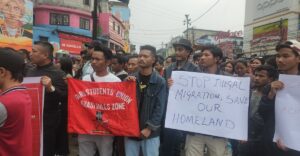
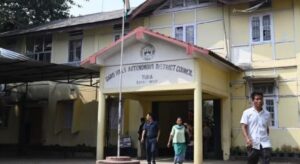


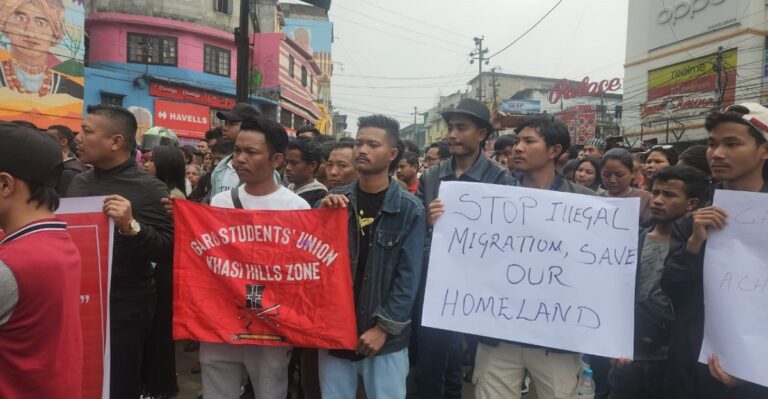
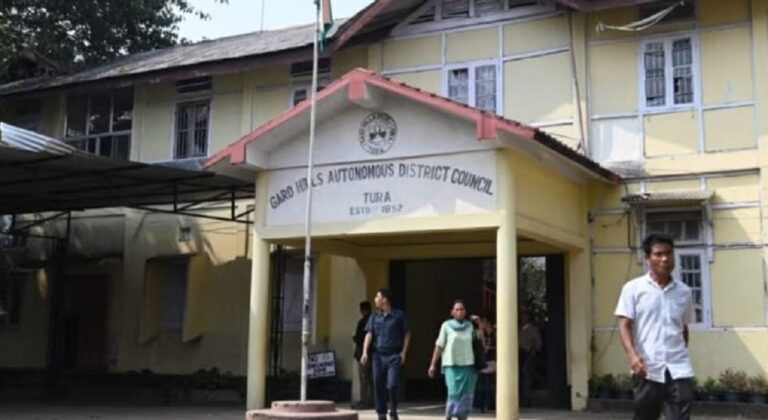
Growing tensions over railway expansion in Meghalaya resurfaced this week after the Jaintia Students’ Union (JSU) issued a firm warning to the Northeast Frontier Railway (NFR), declaring that no survey teams would be allowed to enter the Jaintia Hills unless concrete legal safeguards are put in place to protect tribal land and identity.
The JSU’s reaction comes in the wake of the Union Budget 2024–25, which approved funds for final location surveys of two proposed railway routes into the region: the Jowai–Khliehriat–Chandranathpur line and the Chaparmukh–Jowai line. The Union expressed alarm that the Centre was pushing ahead with railway plans despite the absence of the Inner Line Permit (ILP) regime in Meghalaya or similar strong protective laws aimed at regulating the entry of outsiders.
In a strongly worded statement, the JSU cautioned the Centre and NFR against “imposing the railway project by force,” arguing that unrestricted railway access could endanger the fragile demographic balance of the Jaintia Hills. The Union said that without appropriate safeguards, the land, culture, and identity of indigenous residents would face unprecedented risks.
The students’ body also drew attention to unresolved grievances from previous land surveys, pointing in particular to the situation at Them Iew Mawlong, where displaced families are still awaiting proper rehabilitation. This, the JSU said, raises doubts about the government’s ability to manage the far-reaching social and administrative challenges a full-scale railway project would bring.
Reiterating that it is not opposed to development itself, the JSU stressed that development cannot come at the cost of indigenous rights. It insisted on mechanisms to prevent unchecked migration, which has been a longstanding fear in the Khasi–Jaintia Hills.
Officials from the Northeast Frontier Railway confirmed that the Chaparmukh–Jowai line has finally been included in the sanctioned works of the 2024–25 Railway Budget. However, due to the sensitivity surrounding railway expansion in the region, no date has been set for the preliminary survey. A senior NFR official indicated that field surveys may be possible in 2026, provided there is no renewed agitation.
The proposed Chaparmukh–Jowai route would serve as the shortest rail link between central Assam and Jowai, passing through areas such as Bhoksong, Rajagaon, Baithalangso, Jengkha, Kherani and Umrangso before entering Meghalaya. But previous attempts to bring railways into the Khasi–Jaintia Hills—including the Tetelia–Byrnihat and Byrnihat–Shillong projects—were halted due to intense public resistance, driven by fears of large-scale influx and threats to tribal culture and land.
Despite repeated assurances from the Conrad K. Sangma-led government that no railway project will proceed without public consent, ground realities indicate little progress. The JSU’s latest warning signals another potential flashpoint in the ongoing debate over railway connectivity and demographic protection in Meghalaya.












+ There are no comments
Add yours